Trending

Scotland is not an easy place to keep bees, and it is not an easy place to keep varroa in check. Short seasons, cool summers and long broodless winters all change which treatments perform well and when you can realistically apply them. A method that works beautifully in a warm English valley can disappoint on a damp Aberdeenshire hillside. The aim is not to find one perfect product but to build a plan that suits your apiary, your colony cycle and the time you actually have to spend on it.
Here is an honest comparison of the four tools most Scottish beekeepers reach for, and how they fit together.
Any treatment plan falls apart without counting. You need to know what you are dealing with before you open a bottle. Sugar rolls or alcohol washes give you mites per hundred bees, and the usual trigger for action in a UK colony is around two or three mites per hundred bees, though you should set your own threshold based on colony strength and how much virus damage you are seeing. Sticky boards under a mesh floor show you what is dropping naturally, and uncapping a patch of drone brood reveals mites against the white pupae.
Count in spring, count in late summer, and write the numbers down. A colony that was clean in April can be carrying a serious load by August, particularly if it has robbed out a collapsing neighbour.
Oxalic acid is the Scottish beekeeper's dependable winter tool. It kills mites on adult bees rather than in sealed brood, which is why timing matters far more than dose. Apply it when the colony has little or no brood, so nearly all the mites are riding on the bees where they can be reached.
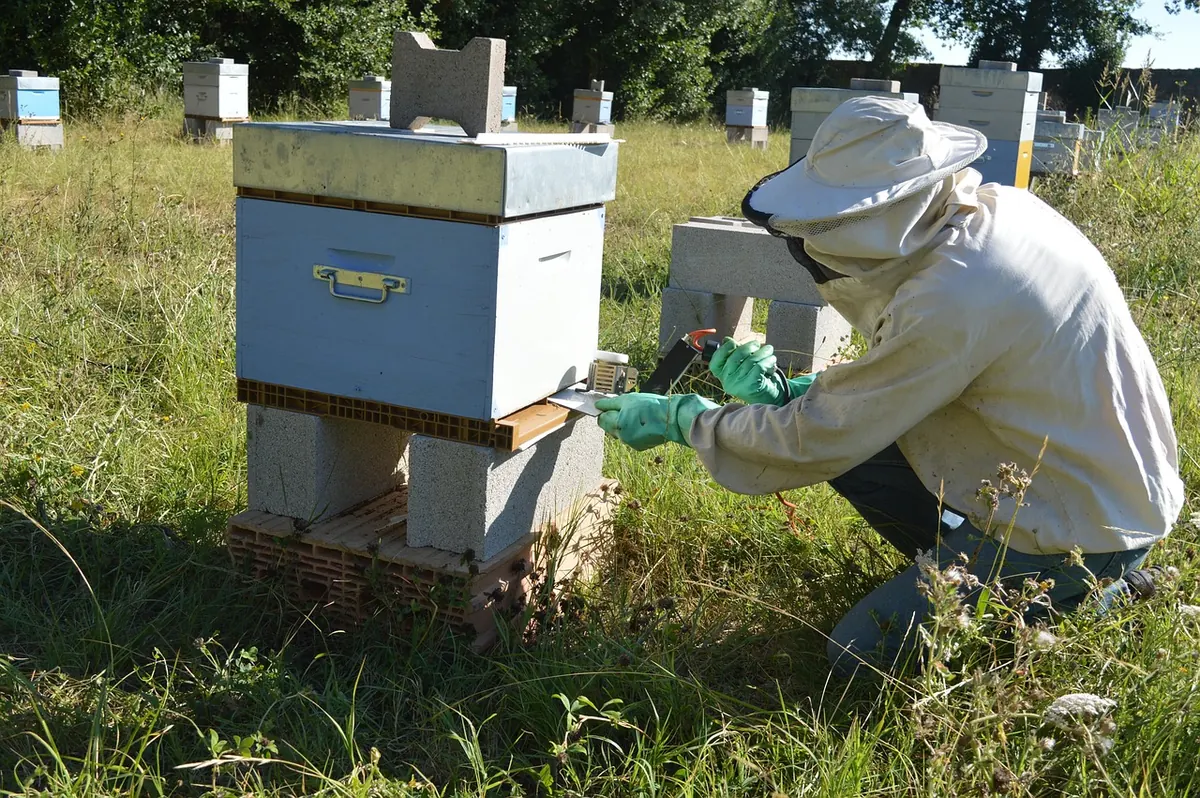
A measured dose of oxalic acid solution trickled along the seams of bees is quick, cheap and needs no special equipment beyond gloves, eye protection and a steady hand. In much of Scotland the broodless window falls somewhere between late November and early January, but mild coastal winters can leave a colony rearing a little brood well into December, so check one or two frames on a still, mild day if you are unsure.
Vaporising oxalic acid with a suitable heater is popular because it disturbs the cluster less and avoids drenching the bees. It needs proper kit, a still day, a well-sealed hive and a face mask you trust — the vapour is corrosive and must not be inhaled. Repeated treatments a few days apart can catch mites that were tucked in brood cells on the first pass.
Formic acid is the one treatment here that penetrates cappings, which makes it useful when brood is present. It is also the fussiest. The vapour is aggressive, and every product has a temperature window on its label that you must respect. Scottish summers frequently sit below the comfortable range, and above it the acid can harm brood and queens. It is typically not for use with honey supers on, so plan it around your crop rather than through it.
Where it works, it works well. Where it is too cool, you have stressed your bees for very little return.
Thymol-based gels and pads are slow-release and need the colony to be active, with enough warmth for the vapour to move through the hive. They generally need daytime temperatures comfortably into the mid-teens and a treatment period of several weeks, which makes late August and early September the realistic slot in most of Scotland. If your heather crop comes off late, you may be pushing your luck.
Supers must be off; thymol taints honey and the bees will taste it. Expect some brood interruption and the occasional unhappy queen, and ventilate the hive according to the instructions rather than the habit of leaving everything tight.
This costs nothing but labour and leaves no residue. Mites strongly prefer drone brood, so giving bees a frame of drone foundation and then removing the sealed comb before the drones emerge takes those mites out of the colony with it.
Do not strip out every drone in a colony, and do not rely on it alone. It reduces the load; it rarely clears it.
An integrated approach means layering methods so no single one has to do all the work. A workable Scottish sequence looks something like this:
Treating on the calendar alone is guesswork. Treating on counts, at the right moment in the colony's cycle, is management.
Varroa medicines are veterinary medicines in the UK, so only use products authorised here and follow the label exactly — including withdrawal periods. These authorisations do change, so check the Veterinary Medicines Directorate's database or ask your local association if you are unsure what is currently permitted. If you are in any doubt about a product, a dosage or a residue question, speak to your vet or your local bee inspector rather than a forum thread.
Store acids and thymol products locked away from children and livestock, wear gloves and eye protection every time, and never mix treatments in the same week just to be thorough. Keep simple hive records: product, batch number, date, colony and the numbers that prompted the decision. Next season those notes will tell you more about your apiary than any general advice ever can.
Photo: jldmat / Pixabay