Trending

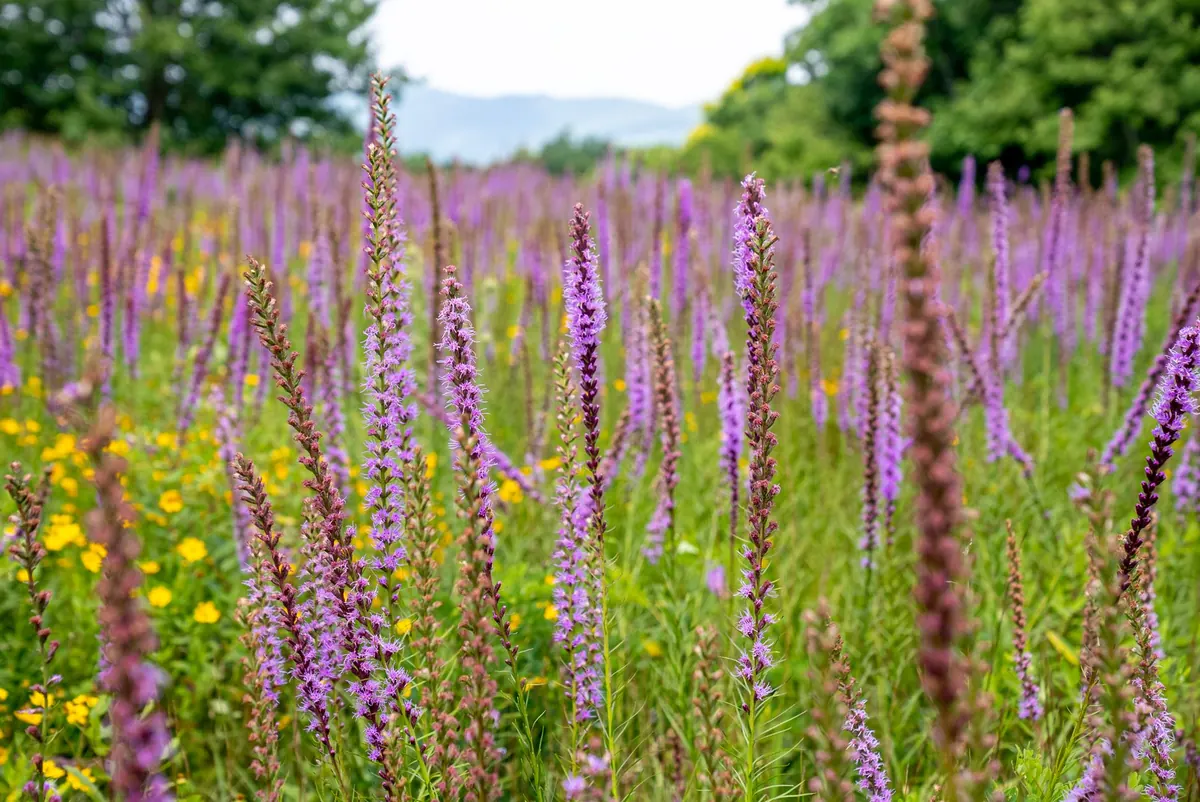
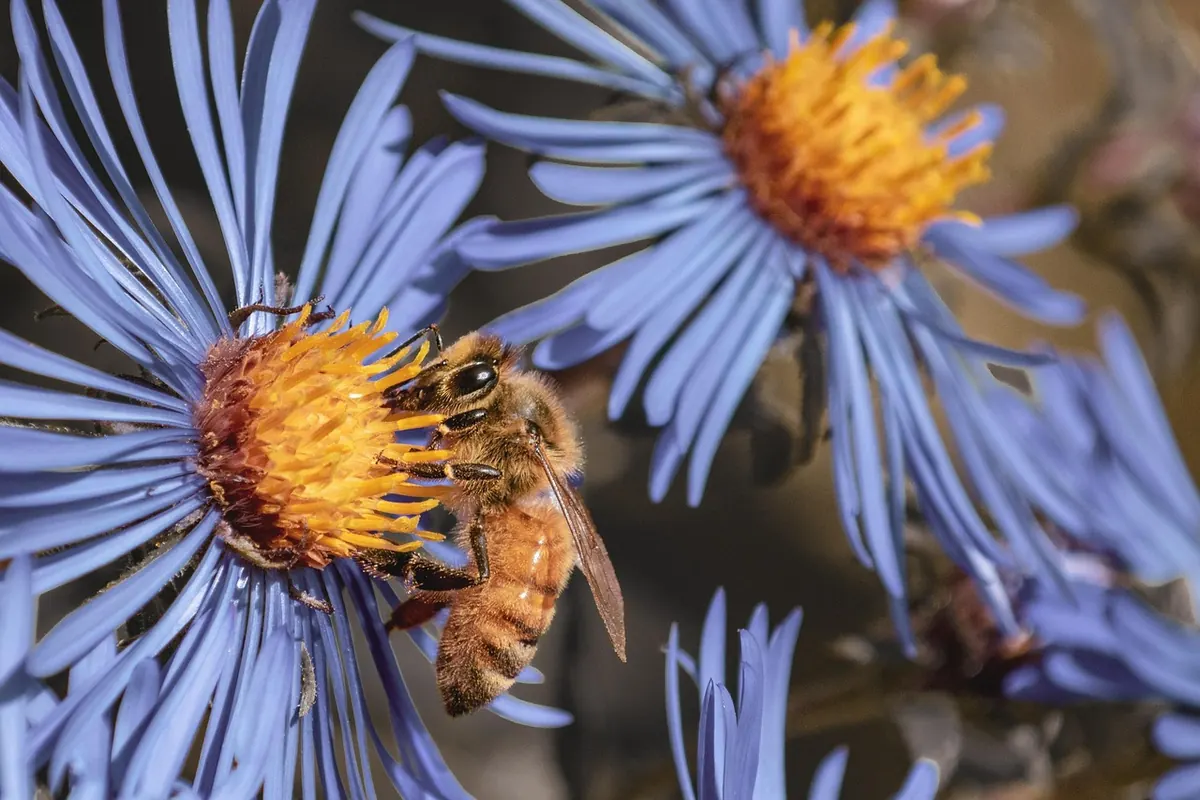
There is a particular afternoon in late August when the ling has turned the moor purple and the hives are humming hard. That is roughly when your heather crop needs thinking about. Heather honey is a strange, wonderful thing: dark, aromatic and jelly-like rather than runny. It will not drain out of a frame the way a summer crop does, and any beekeeper who treats it like ordinary honey ends up with sticky arms, a bunged extractor and a lot of waste. Once you understand how it behaves, though, harvesting it is straightforward — it is simply done differently.
Heather honey is thixotropic. In plain terms, it is a gel that turns liquid when you stir, shake or knock it about, then sets back into a gel when left alone. That comes from the fine colloidal material — proteins and other plant matter — the bees gather alongside the nectar. The same characteristic gives the honey its depth of flavour and its faintly bitter, earthy finish, so it is not a fault to be worked around. It is the whole point of the crop.
Two consequences follow. Gravity will not move it, so a frame left upside down overnight will still be full in the morning. Centrifugal force will not move it either, unless you have agitated it first. The same property makes heather honey superb comb honey, because a piece cut from the frame stays put instead of running off the plate — a point worth remembering when you decide what to do with your best frames.
Temperature matters too. Warm heather honey is far more willing to move than cold. A frame brought in from a cool evening and spun immediately will stubbornly refuse to shift; the same frame left in a warm room overnight behaves quite differently.
Where and when depends on altitude and weather. Lowland and east-coast moors can come into flower in mid-July; upland and Highland moors are usually later, often running into late August. A colony at 200 metres in Perthshire may be finished by the middle of the month while one at 400 metres in Aberdeenshire is still going strong a fortnight later. The bees need warm, humid days to work the ling, and the flow can stop abruptly when the weather turns. Watch the supers rather than the calendar.
Bell heather, which flowers earlier than ling, can give a useful preliminary crop, but it is the ling that produces the classic thixotropic honey. If the two run together you will sometimes get a blend that spins more easily than pure ling — pleasant, but not the real thing.
Heather cappings look different from what you may be used to — often dry, waxy and greyish white — and the honey beneath sits firm. Lift a frame and you will see exactly what you are dealing with. A quick check with a refractometer is well worth the trouble on the heather, because the moisture content is often higher than in a summer crop.
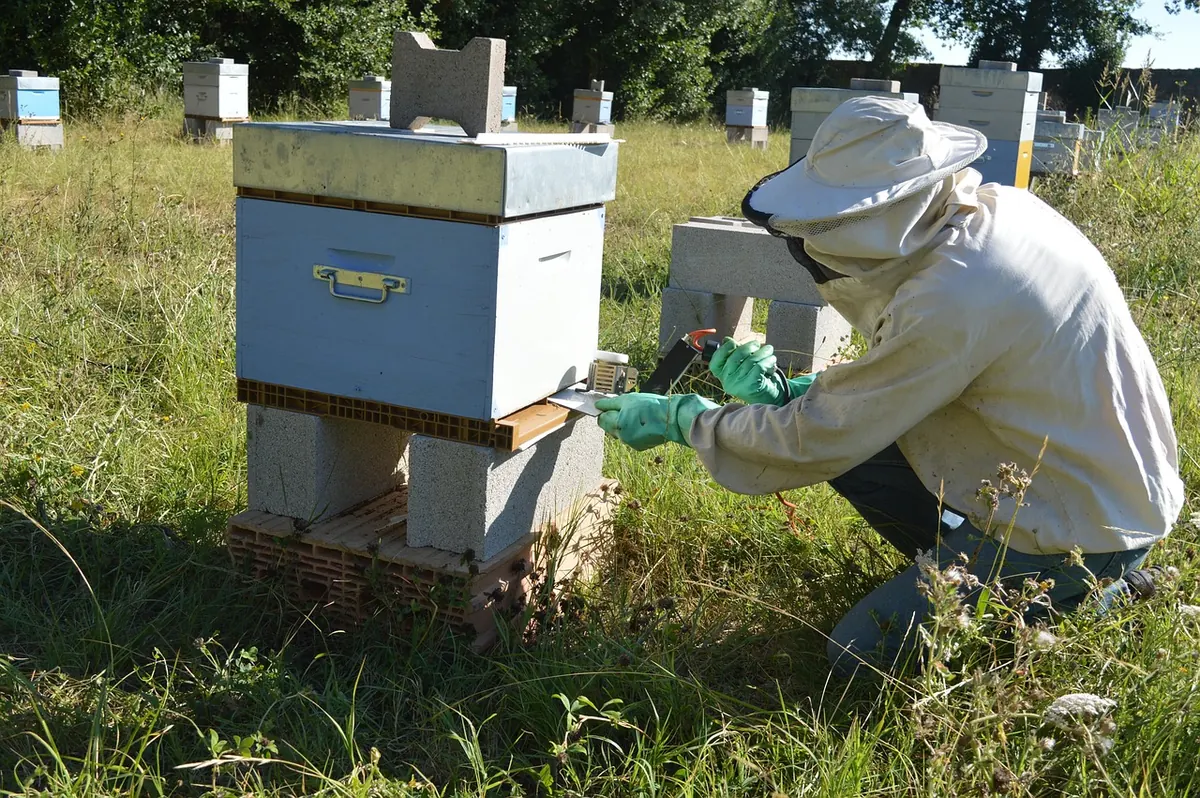
Use a clearer board and give it twenty-four hours, longer in cool weather or with a strong colony. On the heather, check the supers before you clear them: queens taken to the moor often move up and lay, and clearing a super with brood in it traps bees or worse. Find the queen, shake her down, then fit the clearer. Heather supers are heavy — a full one is a two-person lift — so clear boxes on a dry evening with help and a trolley to hand. Load them flat, strap them, and do not stack them so high that the bottom box gets crushed on the track back to the vehicle.
Heather honey stiffens as it cools, so work it warm and work it promptly. Take the supers home, keep them in a warm room and aim to deal with them within a day or two. If a frame has to wait, cover it and keep it out of draughts. Extract any ordinary summer frames first and keep the heather crop separate; the flavour is distinctive and worth having in a jar on its own. Mixing a few pale summer frames into a heather batch does neither any favours.
If you intend to press the crop, uncapping is barely necessary: cut the combs out whole with a sharp knife and drop them into the press basket. If you intend to extract, uncap as normal with a heated knife or an uncapping fork, then do the step most beekeepers forget. Loosening is essential. A spiked roller or needle bed — sold as a honey loosener — is rolled firmly over both sides of the comb. The spikes break the gel and the honey begins to run.
Loosening is the step that separates a good heather crop from a bad afternoon.
Do not be tempted to leave the extractor running at full speed in the hope that brute force will do the job. It will not, and you risk blowing out the combs you were careful to keep.
Extracting gives clean honey and keeps your drawn comb, which matters if you have wired foundation worth reusing. It is also faster once you are set up, and the honey needs less straining. Its weakness is that heather frames rarely empty completely, so you lose a little crop every time.
Pressing is the traditional approach and it recovers nearly everything. Cut the combs from the frame, break them up, and press them in a fruit or honey press, letting the honey drain through a coarse sieve first and a finer one afterwards. The trade-off is that the comb is destroyed, so the bees must draw fresh wax the following season — an expensive proposition on a flow that may only last three weeks. Many beekeepers do both: extract the best frames and press the awkward, half-filled or brood-damaged ones at the end.
Heather honey carries a lot of fine debris, so let it settle. Run it through a coarse sieve into a settling tank, leave it somewhere warm for a few days, and skim or draw off from above the sediment rather than bottling straight from the tap. A finer strainer can be used, but it will slow to a crawl; if you must, warm the honey gently first. Jar it while it is still fluid enough to pour, and expect it to set firm in the jar within days. Customers should be told how to use it: a spoonful stirred through porridge or whisky, or warmed gently in a bowl of hot water, brings it straight back to life.
Handle it well and heather honey is one of the finest things a Scottish apiary can produce. The trick is simply to accept that it will not behave, and to plan the whole harvest — timing, clearing, warmth, loosening and settling — around that single fact.
Photo: AlkeMade / Pixabay